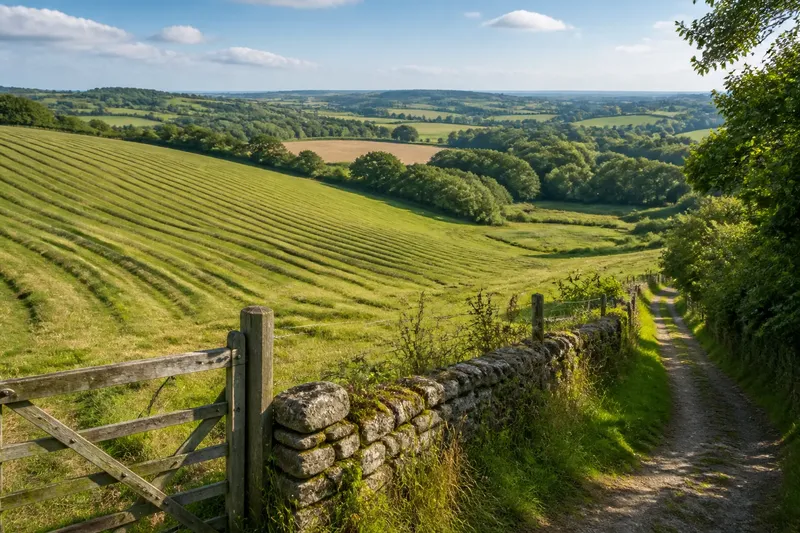
Footpath or Trackway? Choosing a Country Route for the Day
Footpath or trackway: compare surfaces, drainage and access before setting out, then choose a country route that suits the weather, your pace and your group.
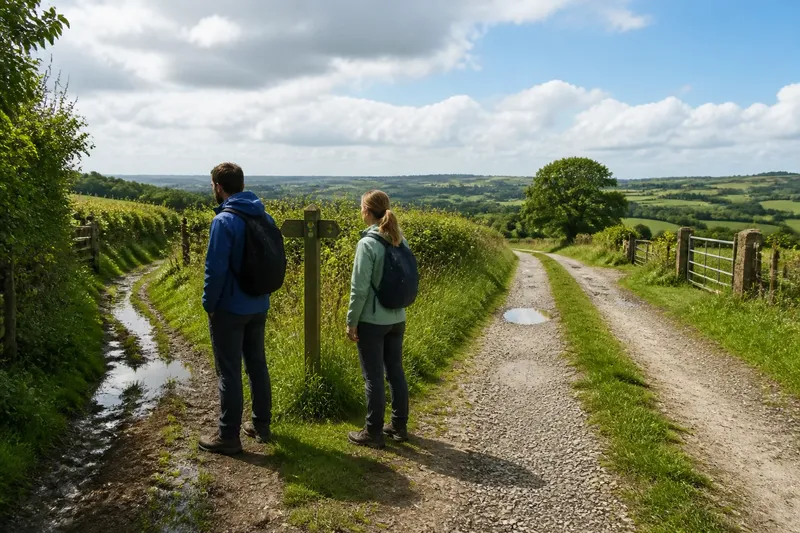
Will a footpath or trackway make the better walk today? For a comfortable country route, check the surface, drainage, width and access before setting out; a narrow line through grass and a broad farm track can behave very differently after rain.
Read the ground
A footpath may cross turf, earth, gravel or woodland litter, with roots and gates interrupting the line. A trackway can be bare earth, gravel or grass, often marked by wheel-worn strips and a raised centre. Neither label tells you whether the ground is firm: a low footpath can hold water, while a trackway can collect it in ruts.
Look for clues at the entrance and along the route. A raised centre or gravel surface may shed water; dark, flattened grass and standing puddles suggest softness. Check the forecast as well, but treat it as context rather than a promise about the path itself. Conditions can change between a sheltered wood and an exposed field.
Choose footwear for the least forgiving part of the route. Grippy soles can help on damp leaves or loose stones, while a secure fit matters on uneven ground. If someone in your group uses a walking aid, pushchair or mobility device, check narrow gates, camber, steps and changes in surface. A broad entrance does not mean the whole route is passable.
Notice the route’s shape
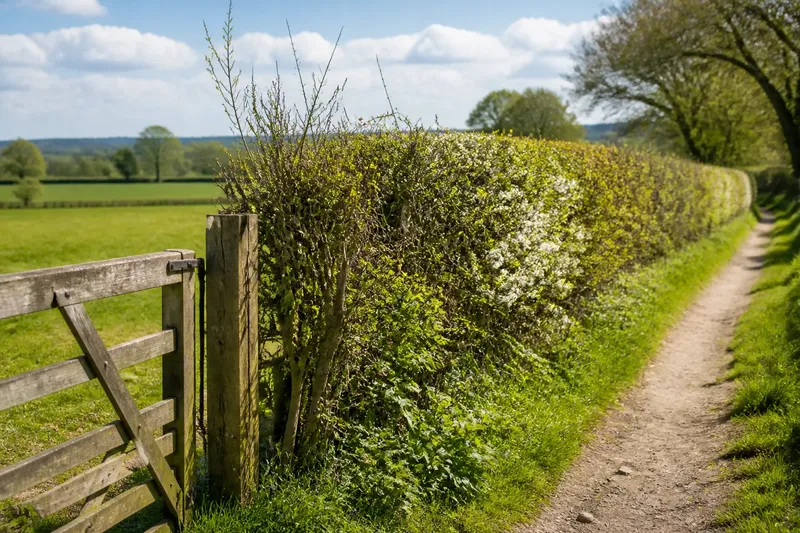
A footpath may draw close to a hedge, stream or woodland edge, then turn sharply or emerge into a field. A trackway can offer a wider view across working land and more room to walk side by side. These are tendencies, not rules: a wooded track can feel enclosed, and an open footpath can give long views.
Use the route’s shape to decide what kind of attention the walk will ask of you. Frequent turns, roots and gates call for a slower pace and more attention to footing. A straighter track may make conversation easier, but exposed stretches can bring wind, sun or little shelter. Neither is automatically more restful; consider what you want to notice and how much effort you want to spend watching the ground.
Working routes may pass gateways, drainage channels or farm buildings. Keep to the mapped way, leave gates as you find them, and give livestock and crops space. A route’s appearance does not establish public access, so follow signs and the relevant map information.
Choose by conditions
- Check for standing water in hollows; if the route is puddled and soft, choose a visibly firmer alternative or turn back.
- Check whether loose stones or wheel ruts interrupt a track; if they make footing uncertain, slow down or choose a smoother route.
- Check for roots, slick leaves and steep changes on a footpath; if these are difficult for anyone in your group, take a more even option.
- Check the narrowest gate and any steps; if a mobility aid, pushchair or walker cannot pass comfortably, use an accessible alternative.
- Check for shade and shelter on exposed sections; if wind or strong sun would make the walk uncomfortable, choose a more sheltered route or shorten the outing.
- Check signs and map markings for access information; if permission is unclear, do not assume the route is open—follow local guidance or choose a clearly permitted way.
Questions before setting out?
Which route suits wet weather?
Choose by drainage and firmness, not width alone. A raised gravel track may be more comfortable than a low grassy path, while a rutted track holding water may be the poorer option.
Which route is easier for a steady pace?
A broad, even track can make it easier to keep a consistent stride. Check for slopes, ruts and loose stones before relying on that advantage.
Can a trackway still feel quiet?
Yes: a trackway may run beside woodland or across quiet farmland. Its width does not tell you how busy the surrounding landscape will feel.
How can I check whether the route is accessible?
Use a current map and look for practical details such as gates, steps, steep slopes and surface changes. If the information is incomplete, contact the relevant local access authority or choose a route whose conditions are clearer.
Make a grounded choice
Imagine you and a friend have a free afternoon after light rain. The mapped footpath crosses a low grassy hollow, while a nearby trackway appears raised and has a firm gravel entrance. You check the signs and confirm that both ways are available to walkers, then inspect the ground: the hollow holds water, but the track’s surface remains firm. You choose the track for the main walk and decide at a signed junction whether to take a short footpath branch; if its entrance is muddy, you stay on the track. The likely result is a steadier outing with the option of a closer look at the fields if conditions allow.
Before leaving, check the route from its access point on a current map, then reassess the surface on arrival. If the ground turns slippery, deeply rutted or unsuitable for someone in your group, turn back or take a clearly permitted alternative. For an ordinary outing, it is not worth trying to decide which route type is universally better: follow the condition of the ground, your group’s needs and the access information. For a footpath or trackway, those checks will usually tell you more than the name alone.